Preparing Pupils for a Digital Future
Here at The Leys, we have been exploring how AI can support learning, enhance outcomes and prepare pupils for a rapidly evolving digital world. Trials of AI platforms, alongside targeted training initiatives, are offering valuable insight into how this technology can be used thoughtfully in everyday teaching and learning.
A particular focus has been the use of AI to support independent study, with an emphasis on pupil experience. Through Learn Anything, pupils could work through practice questions with instant, tailored feedback. Alongside this, the evaluation of Inkling AI has highlighted both its effectiveness in explaining complex ideas and the importance of approaching AI-generated responses with a critical eye.
Pupils have engaged positively with the platform, with one pupil highlighting that, “It helped teach me, so I fully understand, rather than just telling me the information and expecting me to recall it.” At the same time, they recognise the need to question and verify outputs, a balance that reflects the School’s wider emphasis on developing thoughtful, independent learners. In this context, AI is most effective within a clear framework, with teacher guidance ensuring it enhances rather than replaces meaningful learning, read more on the trial here.
Beyond the classroom, the school has been pleased to contribute towards the broader understanding of AI in education through research led by Cambridge University Press & Assessment comparing the impact of an AI maths tutor with that of a human tutor. This is helping to build an understanding of the ways in which pupils interact with AI tutors.
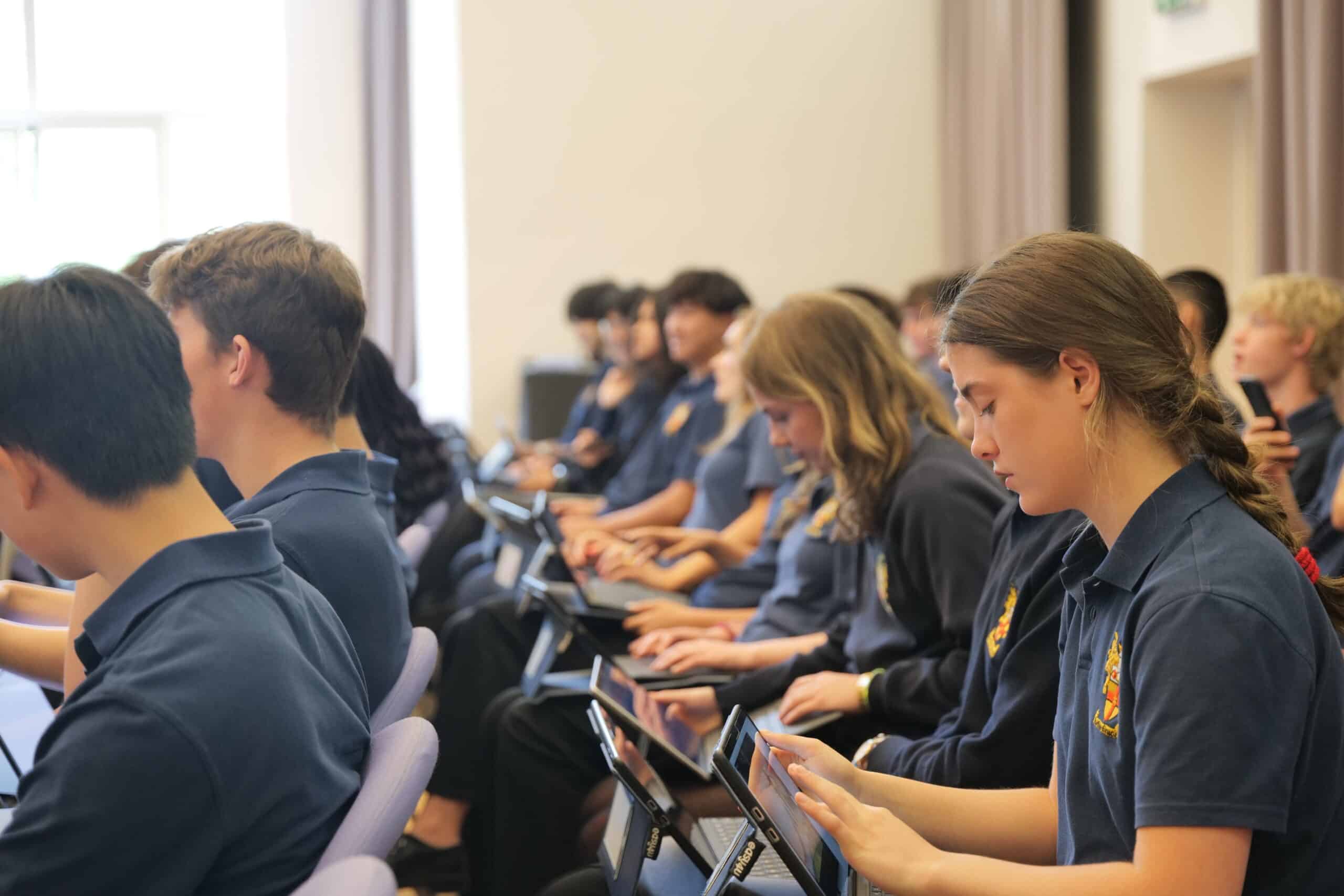
Alongside these developments, there is a strong focus on equipping pupils with the skills to use AI responsibly. A recent Lower Sixth session with FactBased introduced strategies such as red-teaming, to critically evaluate and refine AI-generated content. The impact has been clear: twice as many pupils could explain with clarity how AI works, following the session. While 87% of pupils already saw AI as a starting point, reflecting a strong base level of digital literacy, post-session 95% said they would change how they use AI, demonstrating a growing awareness of how to engage with it more thoughtfully and effectively.
As one pupil reflected, “Although initially sceptical, the AI session proved to be genuinely useful and informative. It showed me how AI can be used effectively and productively…. to critique and improve personal statements.” These experiences are helping to build confidence and digital literacy in pupils as they learn. Taken together, these initiatives reflect a measured and purposeful approach. AI is not simply a tool for efficiency, but an opportunity to deepen learning, foster independence and develop critical thinking.
Peter Hicks, Head of Digital Learning commented: “We recognise that artificial intelligence is already reshaping how pupils learn, so there’s a need to develop thoughtful and educationally informed approaches to its use in school. This year we’ve been listening carefully to pupils’ and teachers’ views on AI and working with several innovative EdTech providers to assess how we use it to best effect while protecting deep thinking.”
As The Leys continues to explore AI’s place in the School, the emphasis remains firmly on high-quality teaching, with technology used to enrich and support the educational experience.